The building
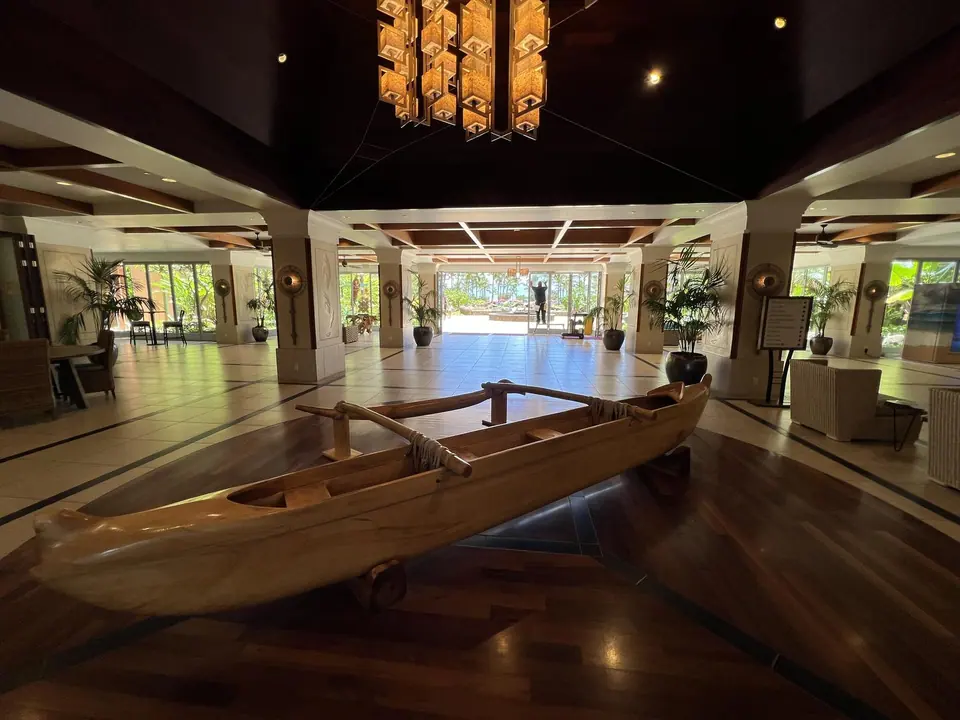
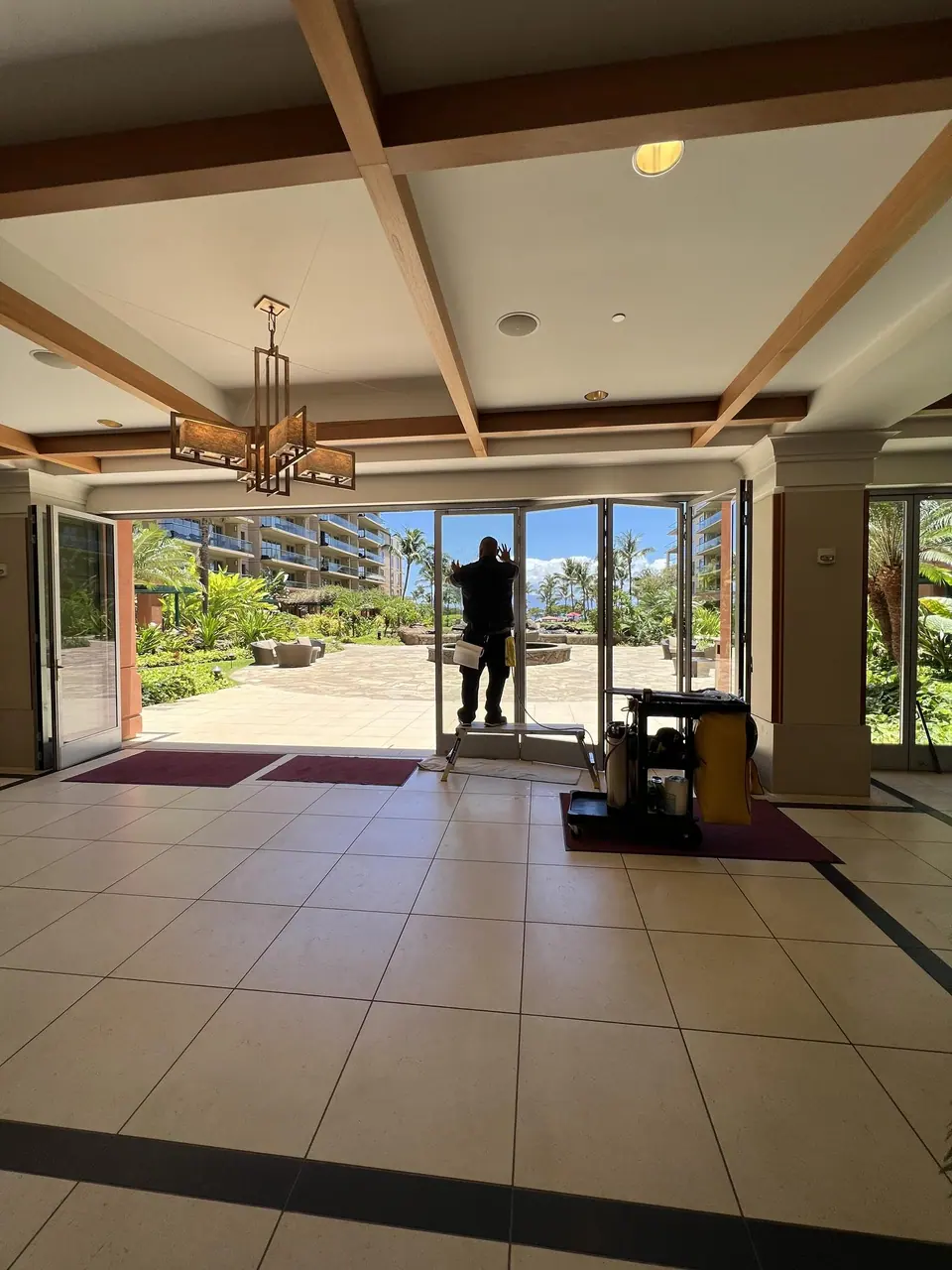
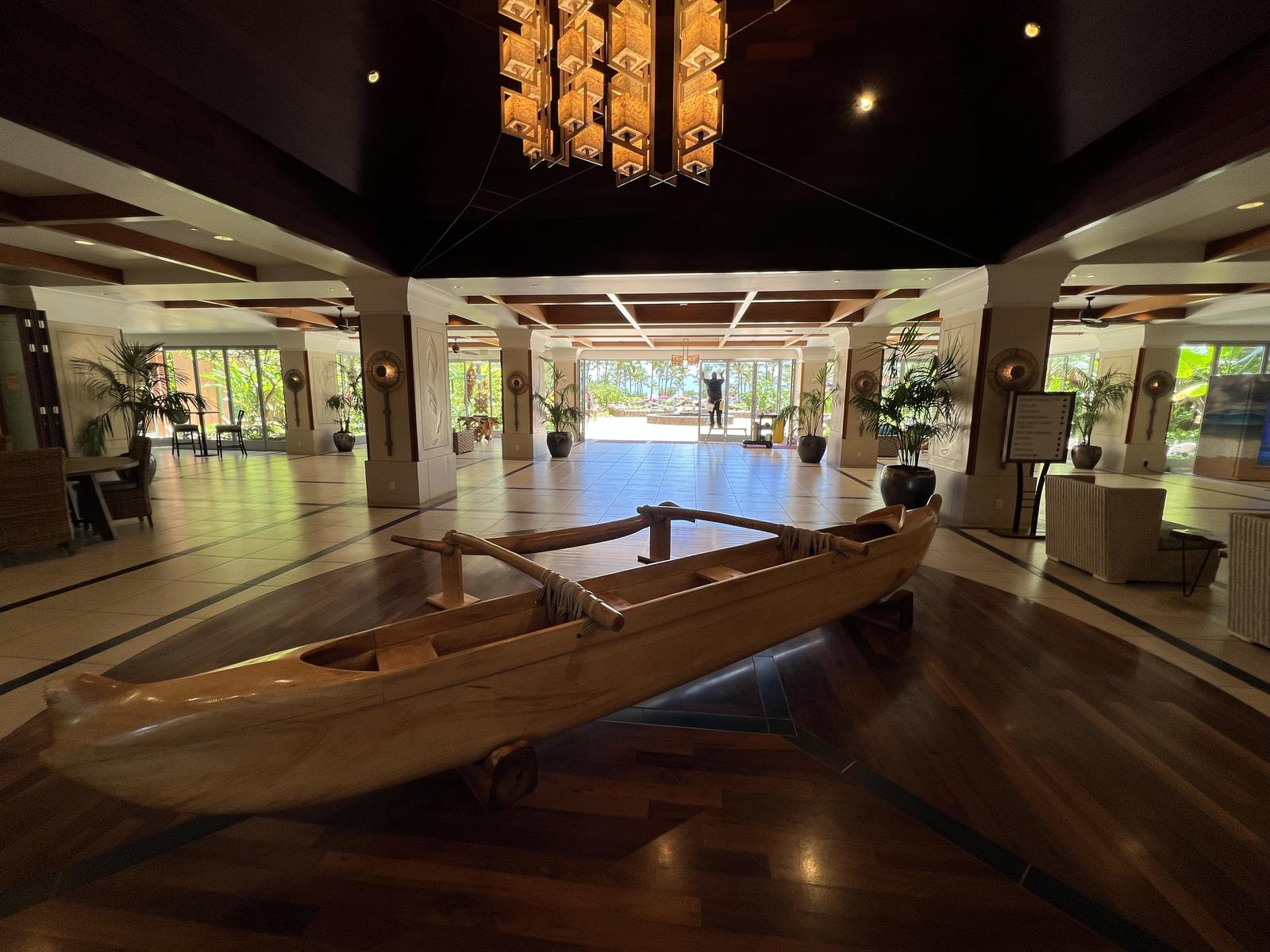
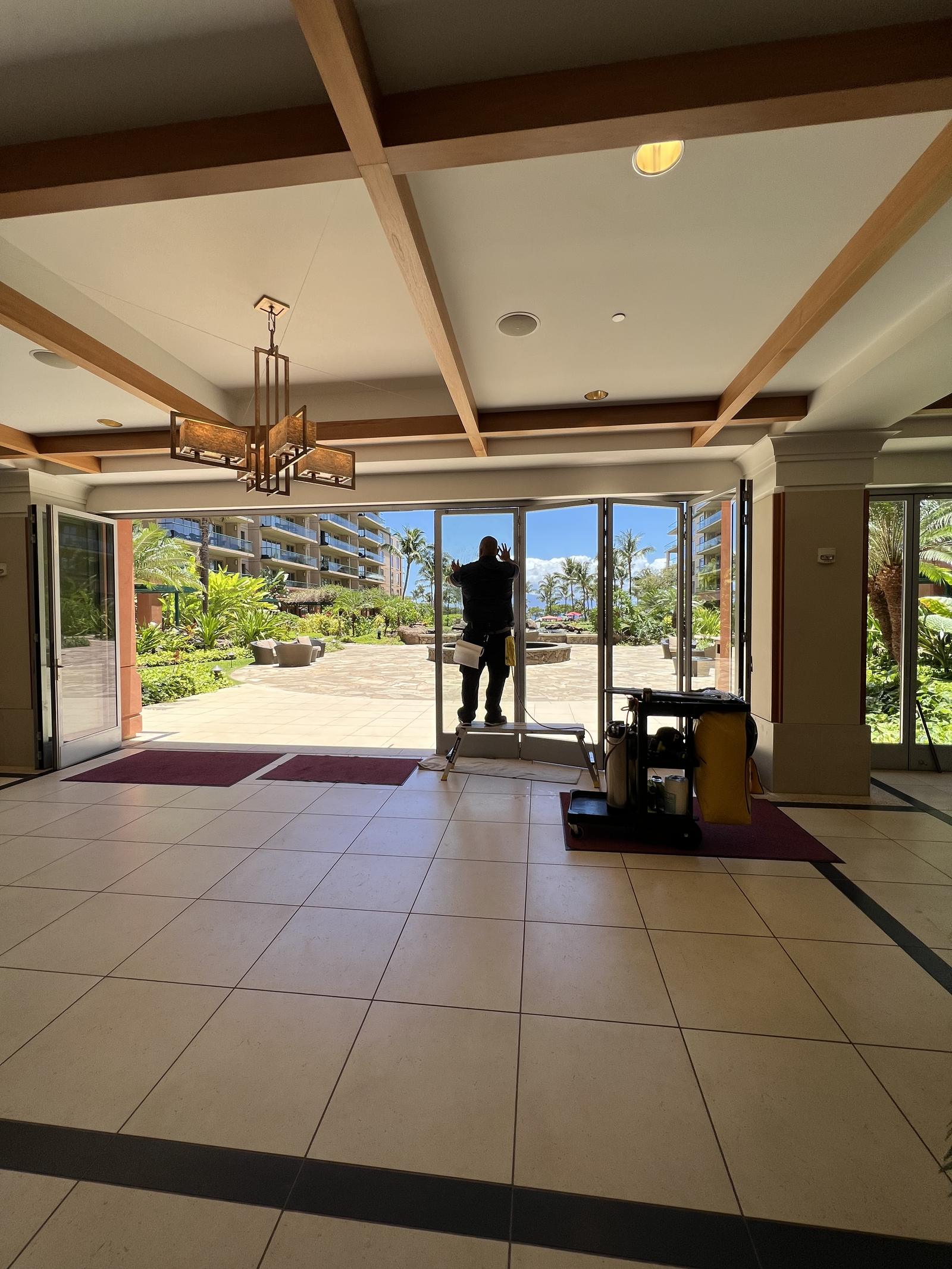
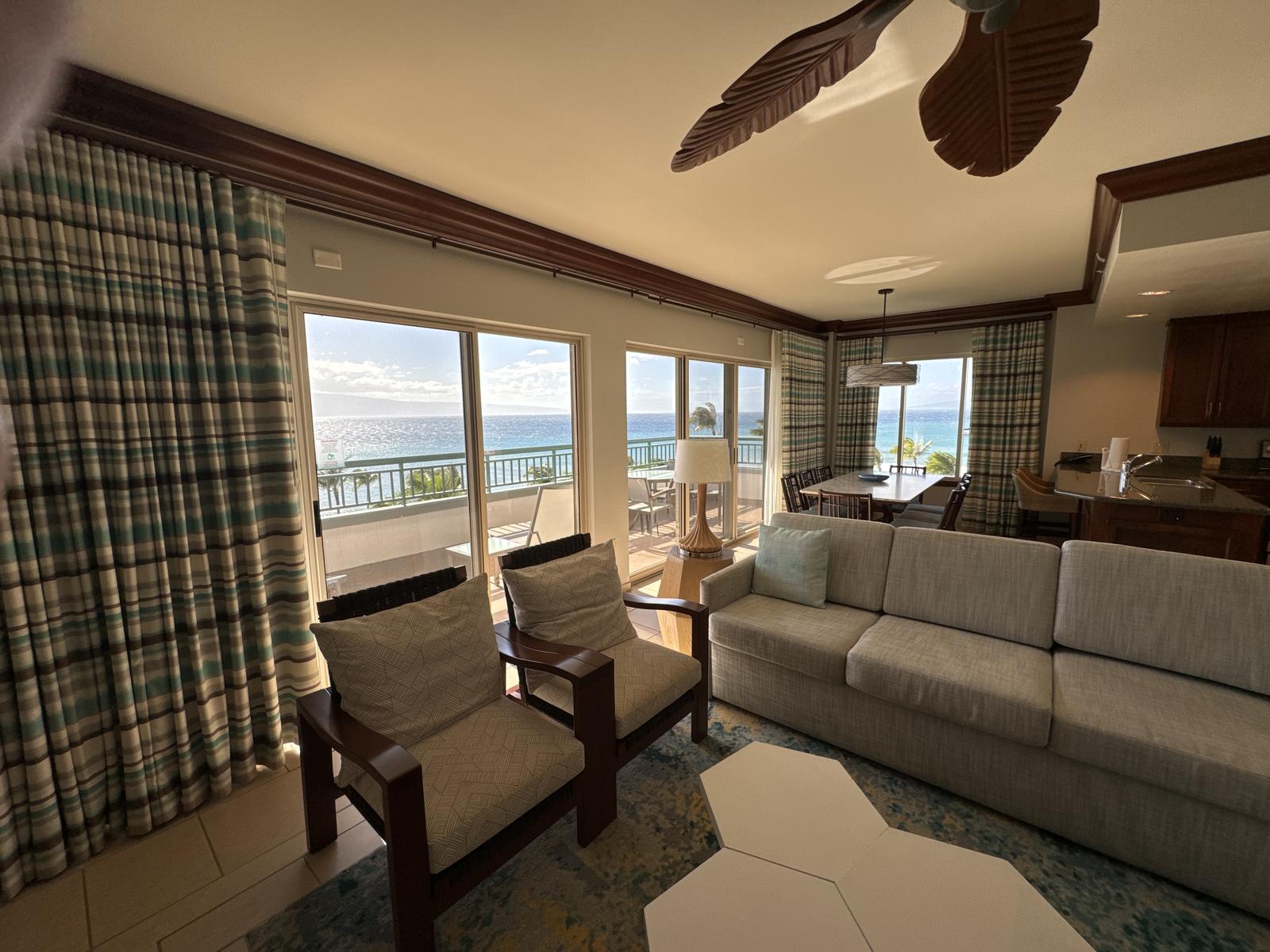
Montage Kapalua Bay occupies the headland above Kapalua Bay at the northern end of west Maui, where the resort coast turns the corner and the shoreline becomes rock rather than sand. The buildings are low, spread out and glazed almost continuously towards the water.
The problem with a view like that
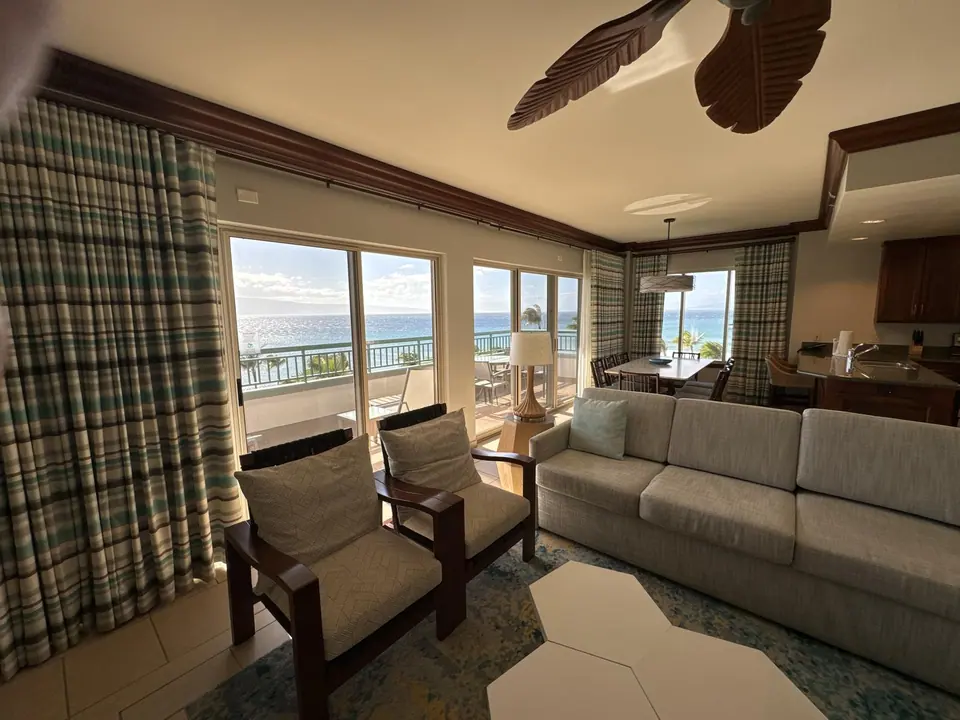
Kapalua is further north and more exposed than Kaanapali. It catches the trades coming round the point and takes more passing showers, but it also takes a hard afternoon sun, and the bay in front of it behaves like a reflector: on a bright day the light arriving at a bay-facing window comes from the sun and from the water in roughly equal measure, and the reflected component comes in low, under every overhang.
The interiors are the complication. Rooms at this level are finished in the materials that record light damage fastest — wide hardwood, natural stone, wool and silk, and artwork on the walls. Fading is not a maintenance nuisance in a suite like that; it is a refurbishment.
There is also an appearance constraint that rules out most of what people reach for. Anything that makes the glass look dark, mirrored or colored is unacceptable on a building of this kind, and the whole elevation has to read as one surface from the grounds and from the water.
Why the film specification matters more here
Window films are not one product. Cheap dyed film has no reflective layer at all: it works by absorbing light, and the dyes break down under sustained UV, which is why old film turns purple and bubbles. Metallised film reflects well but reads as a mirror from outside and can attenuate signal through the glass. Spectrally selective and ceramic films use non-metallic layers tuned to the infrared band, so they stay close to neutral in color, keep visible transmission high and do not go purple.
For a resort like this that is the whole argument. The film removes most of the infrared load and effectively all of the ultraviolet, cuts the glare coming off the bay, and does it without the guest in the room ever noticing there is film on the glass. Honestly stated, it will not make a room cold — it takes the sun out of the equation, and the cooling system then has a load it can actually meet.
The other reason film rather than anything else gets used on an exposed coastal resort is that it lives on the protected side of the pane. Nothing is fixed to the outside of the building, nothing corrodes, nothing needs cleaning down twice a year, and the elevation the resort was designed around is unchanged. Where a property is occupied year-round that also matters operationally: rooms and public areas can be done a few at a time, in rotation, without closing anything.
We work on resort and residential property across Maui and Oahu. See our commercial projects or ask us for a quote.
TESTIMONIALS
What People Say

We at the waikiki shopping plaza and waikiki business plaza have used or recommended Ace Glass Tinting on eight (8) different jobs in the last few years. Our jobs ranged from small two windows (36 sq. ft.) to a very difficult...
This letter is to thank you for the great job you did on our windows and doors.
It is so wonderful, we can already tell the difference in temperature...
Thank you very much for your glass tinting services for installation of the Huper Optik 40 ceramic film on our meeting rooms (Rooms 516 & 517). This film has improved the quality of our meeting rooms by reducing the heat....
Ace Tinting tinted Paradise Cruise offices on the 6th and 7th floors of Aloha Tower and on the Star of Honolulu (1500 passenger Dinner Cruise Ship). The tinting significantly reduced heat and glare in the interior spaces....
Get a Free Quote
Need More Information?
Get a free quote
Tell us the glass you want covered and Keith will call you back to arrange a time to measure it.
Residential film from $300
Priced per square foot of glass. No charge
for the estimate.
Prefer to talk? (808) 551-5500, Mon – Sat, 8:30am – 6:00pm. Sunday closed.