Window Film, Sorted By What It Actually Does
Six families of flat-glass film, fitted to homes, offices, temples and boats across Hawaii. We install Solar Gard and XPEL VISION window film and TuffSkin surface protection — here is what each type is for, and how to tell which one you need.
Solar & Heat-Control Film
For rooms the afternoon sun makes unusable.
West- and south-facing glass in Hawaii takes direct sun for hours, and the heat keeps arriving long after the glare has stopped being the obvious problem. Solar film stops a large share of that infrared energy at the glass, before it becomes a room the air conditioning has to fight all afternoon. The view stays; so does the daylight. The films we fit here are Solar Gard and XPEL VISION Solar, on home windows, lanai doors, office curtain wall and boat cabin glass. How much heat a given film rejects depends on the film and on the glass it is bonded to, so we measure yours and quote the figure for your windows rather than a brochure number. For scale: across the 35 films in the XPEL VISION Solar range the published total solar energy rejection runs from 37% to 88%, and Solar Gard publish up to 79%. The near-clear films that leave a room bright sit in the 40s and 50s; the 80s belong to dark and exterior grades most homes would not want.
GET A QUOTESafety & Security Film
Glass that holds together when it breaks.
A thick, bonded layer that keeps broken glass in the frame instead of across the floor. It matters through hurricane season, on ground-floor storefronts and lobbies, in schools and temples, and on any large pane sitting above head height. Be clear about what it is: it does not make glass unbreakable. It keeps the pane in one piece when it fails, stops the flying edge, and buys time against anyone trying to get through it. Fitted to entrance doors, shopfronts, stairwell glazing and exposed residential windows, in Solar Gard safety film or XPEL VISION Safety and Security. Thickness is the specification that matters and it is chosen for the job, not sold as a single grade — the clear safety films run thinner than the security grades, which is the difference between holding a broken pane together and resisting a determined attempt to get through it.
GET A QUOTE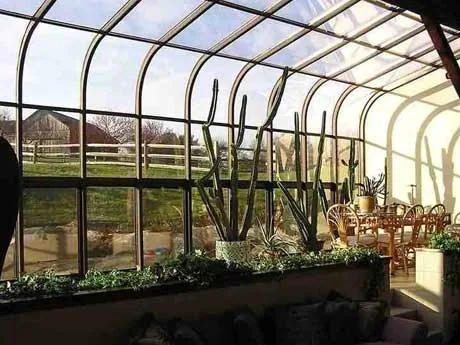
Decorative & Privacy Film
Privacy without giving up the daylight.
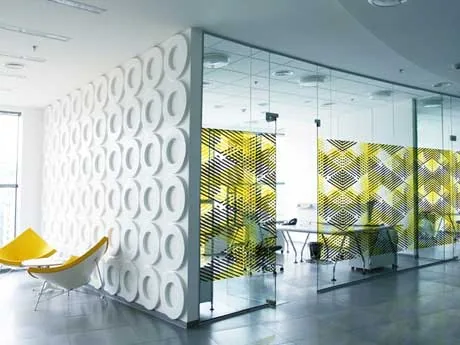
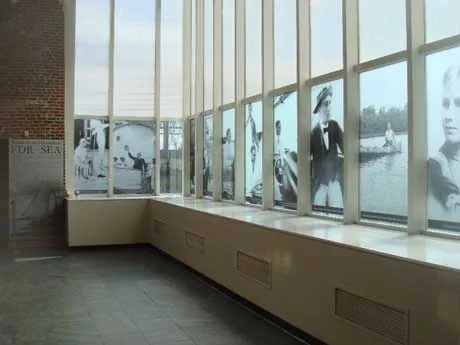
Frosted, etched, gradient and patterned films turn clear glass into a screen while the light still comes through. Conference rooms, bathrooms and street-facing ground floors are the usual jobs; we also cut logos, wayfinding, and detailing for temple and heritage glass. The advantage over sandblasting or replacing the pane is that it is reversible — the film comes off and the glass is as it was — which is why tenants, and anyone working on a building they cannot permanently alter, tend to choose it. The decorative films we cut are Solar Gard and XPEL VISION Decorative.
GET A QUOTEUV-Protection Film
For floors, artwork, timber and fabric that are fading.
Hawaii's UV load stays high all year, and it is the main thing taking the color out of koa, rugs, artwork, altar cloth and shopfront stock. Clear UV film blocks almost all of it without changing how the window looks, which matters where a tinted film would be wrong: galleries, temples, showrooms and heritage interiors. Worth knowing that fading is not caused by UV alone — heat and visible light do their share — so where fading is the whole reason you are calling, we usually pair this with a solar film rather than sell you one and call it solved. On the UV number itself both ranges are consistent: every film in the XPEL VISION spec sheet is published at 99% UV rejection, and Solar Gard state more than 99%.
GET A QUOTE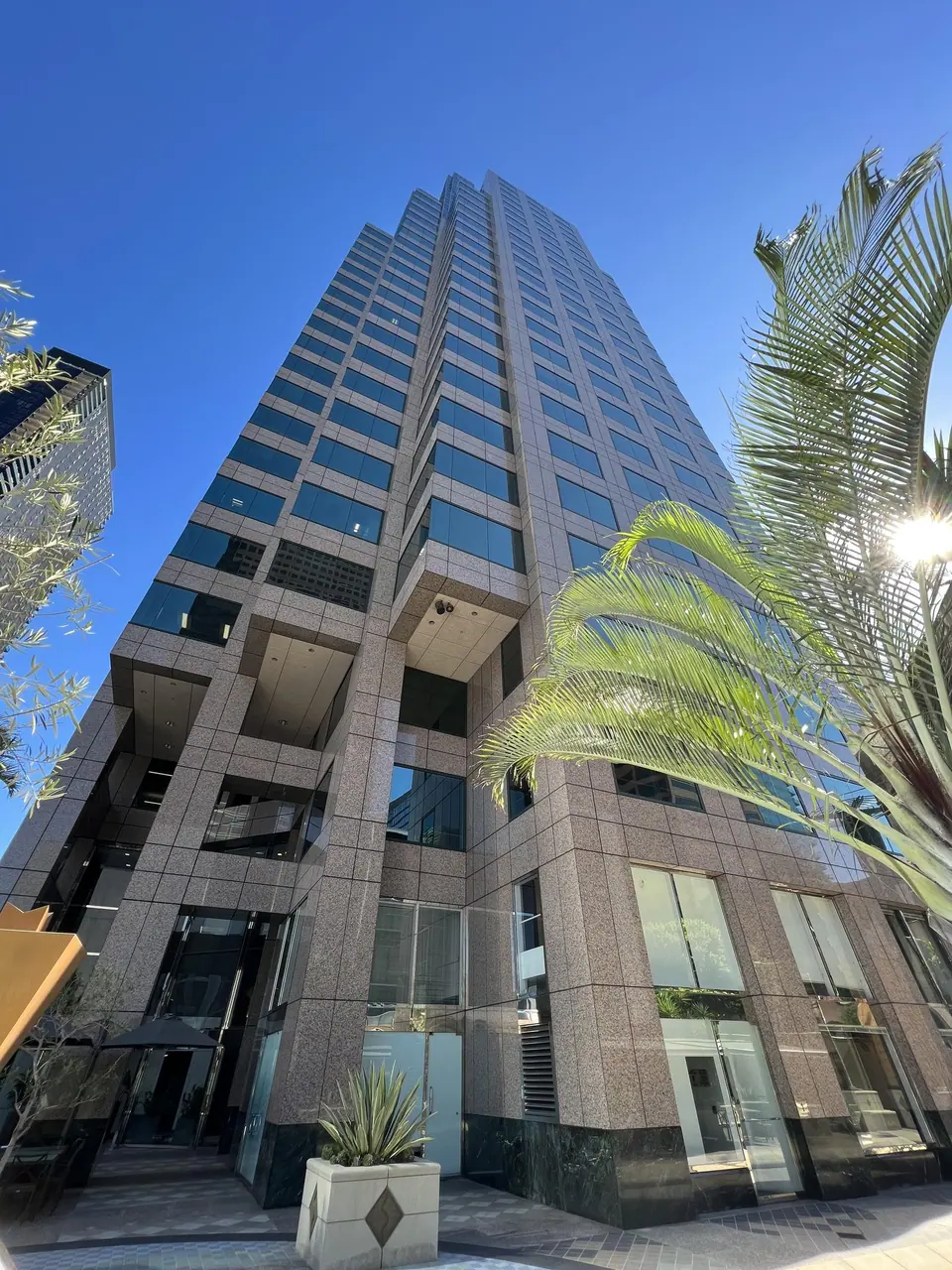
Anti-Graffiti Film
For glass that keeps getting tagged, etched or scratched.
A clear sacrificial layer over the glass. When it is tagged, acid-etched or scratched, the film is peeled off and replaced and the pane underneath is untouched — instead of paying to replace a large shopfront pane, or living with the damage until you can. It goes on storefronts, transit shelters, lobby glazing, elevator glass, stairwell windows and restroom mirrors, and it can be fitted over glass that is already protected by solar film. The line we install is XPEL VISION Anti-Graffiti. As far as we can tell nobody else in Honolulu is offering this — if you have been quoted for glass replacement on repeat vandalism, it is worth a conversation before you spend that money.
GET A QUOTESurface Protection Film
Not glass — stone, counters and metal panels.
The same principle applied to hard surfaces, and here the product is TuffSkin. A clear sacrificial layer bonded over granite, marble, quartz and polished metal takes the etching, scratching and staining that would otherwise go permanently into the stone. When it has done its job it is stripped and replaced, and the surface underneath comes back untouched — which is a great deal cheaper than resurfacing or replacing a slab. Kitchen and bar counters, hotel vanities, reception desks and back-of-house panels. Elevator cabs are a job of their own — the interior panels and the outer skin both take daily trolley, luggage and fingertip damage, and refinishing a cab means taking the lift out of service. Filming it does not.
MORE ON SURFACE PROTECTION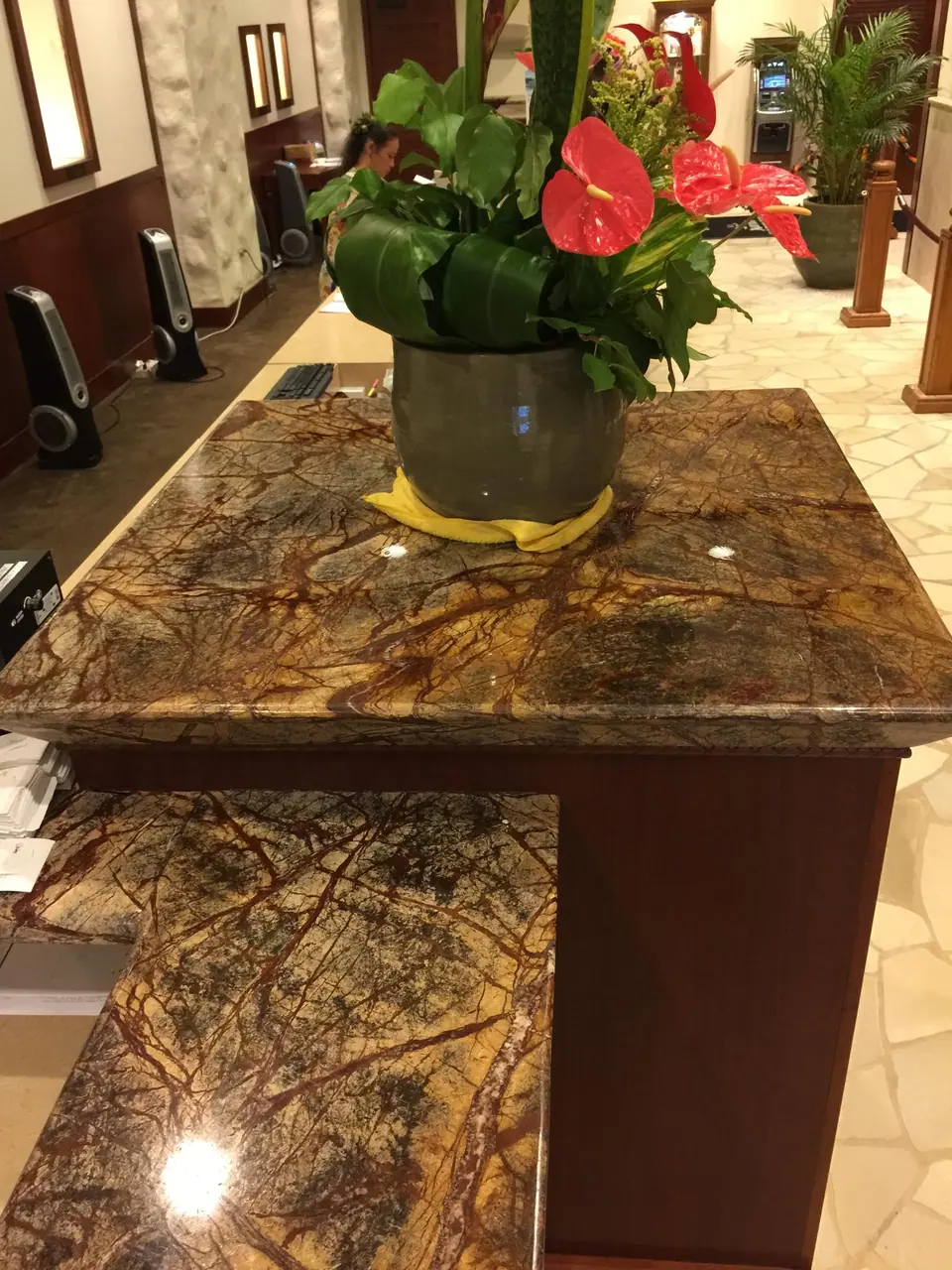
What we carry, and how we specify it
Ace installs Solar Gard and XPEL VISION window film, and TuffSkin surface protection. That is what we buy and what we fit. Carrying more than one range matters more than it sounds: when an architect or a building manager writes a particular film into a specification, a single-brand shop has to argue or walk away. What we will not do is pick your film out of a brochure: the right specification depends on which way the glass faces, whether it is single or double glazed, how close it sits to salt air, and what the room is actually for. We measure your glass, tell you which film we are proposing — and why — before any work starts. Keith's 40+ years of Hawaii installations is what that judgement is built on.