The vessel
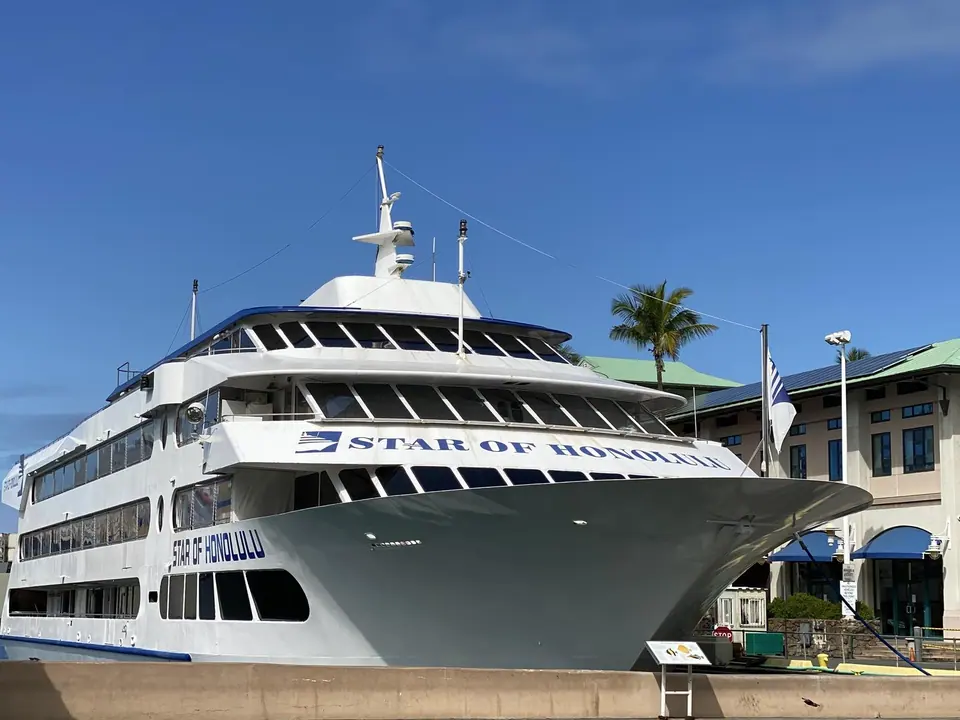
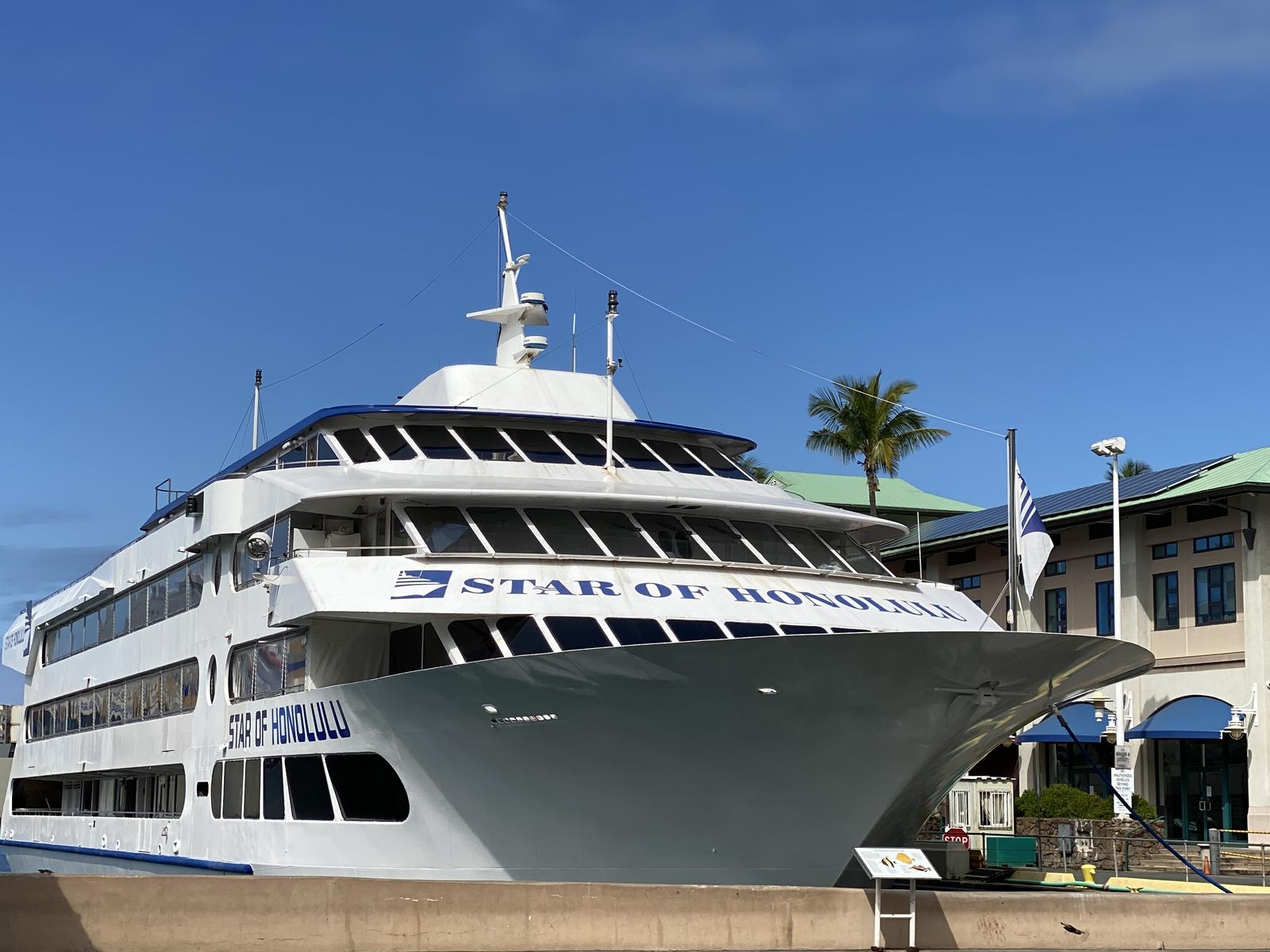
The Star of Honolulu is the largest dinner-cruise vessel working out of Honolulu Harbor, sailing from Aloha Tower with up to fifteen hundred passengers across four decks. Its enclosed dining decks are glazed almost continuously along both sides.
A building whose orientation changes every few minutes
On land you design for a known elevation: this wall faces west, so it is the one that needs work. A vessel has no fixed elevation. The Star leaves the harbour in the late afternoon and turns along the Waikiki shoreline, and over the course of a cruise every window on the ship becomes the west-facing one.
It becomes the west-facing one at the worst possible moment, too. The sun is low, it is dead ahead rather than overhead, and it is doubled by the reflection off the water — a mirror at eye level, which is the single hardest glare condition there is. Passengers are seated at tables with plates in front of them and cannot move away from it.
The heat is a separate problem. An enclosed dining deck is a large glazed volume with a low ceiling, a full room of people, hot food service, and air conditioning that runs off the vessel's own generation rather than off shore power. Every kilowatt of solar gain coming through the glass has to be removed by a plant with a hard ceiling on its capacity.
And everything on board is finished in materials that have to survive full-day UV at sea, where there is nothing whatever to shade them, plus salt on the outside of every pane.
What window film does about it
Applied to the interior face, film cuts the infrared load so the dining decks stay comfortable without the plant running flat out, and brings visible transmission down enough to make a low sun over water tolerable without taking away the view people boarded for. Removing the ultraviolet protects seating, carpet and joinery — and on a working vessel replacing those is not just a cost, it is time out of service.
The reason it is the only realistic answer on a vessel is that every alternative is unavailable. You cannot hang external shading off a moving hull. You cannot reglaze without taking the ship out of service. You cannot add cooling capacity that the generation will not support. Film is applied inboard, alongside a normal maintenance window, and it changes nothing about the vessel's profile or its certification.
One honest qualification about marine work: a ship is not all flat glass. Curved panels, acrylic and polycarbonate behave differently from tempered flat glazing, and some of them should not be filmed at all. A vessel gets surveyed pane by pane rather than quoted by the square foot.
We have filmed vessels and waterfront buildings around Honolulu Harbor for years. See our marine work, our commercial projects, or ask us for a quote.
TESTIMONIALS
What People Say

We at the waikiki shopping plaza and waikiki business plaza have used or recommended Ace Glass Tinting on eight (8) different jobs in the last few years. Our jobs ranged from small two windows (36 sq. ft.) to a very difficult...
This letter is to thank you for the great job you did on our windows and doors.
It is so wonderful, we can already tell the difference in temperature...
Thank you very much for your glass tinting services for installation of the Huper Optik 40 ceramic film on our meeting rooms (Rooms 516 & 517). This film has improved the quality of our meeting rooms by reducing the heat....
Ace Tinting tinted Paradise Cruise offices on the 6th and 7th floors of Aloha Tower and on the Star of Honolulu (1500 passenger Dinner Cruise Ship). The tinting significantly reduced heat and glare in the interior spaces....
Get a Free Quote
Need More Information?
Get a free quote
Tell us the glass you want covered and Keith will call you back to arrange a time to measure it.
Residential film from $300
Priced per square foot of glass. No charge
for the estimate.
Prefer to talk? (808) 551-5500, Mon – Sat, 8:30am – 6:00pm. Sunday closed.